Mattress materials & support
How to Evaluate Organic Latex Layers for Everyday Support
Two beds can both feature natural latex and still feel strikingly different. The difference often lies in the details: where the latex sits, how thick it is, how firm it feels, and what lies beneath it. Learning to read those layers can make mattress research calmer, clearer, and far more useful.
Published November 13, 2026
“Latex mattress” sounds like a neat category, but it covers a wide range of constructions. One bed may use latex as a thin comfort layer above a spring system. Another may have several inches of latex over a denser latex core. A third may combine latex with wool, cotton, or other materials. Each arrangement can change the way the mattress cushions, responds, and supports the body.
That is why evaluating an organic latex bed involves more than spotting a certification logo or reading the word “natural” on a product page. Materials and sourcing matter, but they do not tell you whether the mattress will feel comfortable to you. To make a more informed assessment, look at the layer order, the thickness and firmness of each layer, the support system below, and how those choices relate to your sleep position and preferences.
Start by separating the comfort layer from the support core
A mattress is a system, not a single slab of material. Its upper layers shape the first impression when you lie down: how readily the surface gives way, how much cushioning you feel around your shoulders and hips, and how quickly the bed responds when you move. Lower layers help carry the load and limit excessive sinking.
In a latex mattress, the comfort layer may be latex, while the support core may be a thicker latex section, an innerspring unit, or another construction. Some models use latex throughout; others use it only near the surface. A mattress described as “latex” may therefore have a very different internal design from another mattress carrying the same broad label.
Ask for a layer-by-layer description. Ideally, it should identify the material in each section, its position in the mattress, and its thickness. If a listing names latex but does not explain whether it is a comfort layer, a core, or one component in a hybrid, the label alone leaves important questions unanswered.
Why layer order changes the feel
Picture the layers as a sequence of responses. The top layer meets the body first. Beneath it, the next section affects how far the body settles and how quickly the mattress firms up. The base or core then provides the deeper structure. A small change in that sequence can make the same material feel noticeably different.
Latex placed close to the surface may create a buoyant, responsive feel, with cushioning that adjusts as you shift position. When latex sits beneath a softer quilt or another comfort material, the surface impression may be gentler or more gradual. A firmer layer beneath softer latex can help limit deeper compression; a more yielding support section may allow a different degree of sink. Neither arrangement is automatically better. The useful question is whether the combination suits your body and the way you sleep.
Hybrid mattresses make the interaction especially clear. A latex comfort layer above coils may feel different from an all-latex design, even if the latex itself has similar characteristics. Coils can contribute their own springiness and support, while the top material influences the initial cushioning. Construction descriptions help explain the experience; a materials list without layer order does not.
Thickness: a clue, not a verdict
Layer thickness gives useful context, but it is not a shortcut to predicting comfort. A thicker latex layer may allow more gradual contouring or a more pronounced cushion, depending on its firmness and what supports it. A thinner layer may change the surface feel without defining the whole mattress. The effect depends on the complete build, including the layers below and the cover above.
It is also worth distinguishing the thickness of a single latex layer from the overall mattress height. A tall mattress could include several different materials, while a thinner model could use a substantial latex section. Neither total height nor a prominent “extra-thick” claim tells you, by itself, whether the bed will feel soft, firm, or supportive.
When comparing models, record each layer’s thickness rather than relying on overall mattress depth. Look for descriptions that clarify which inches are latex and which belong to quilting, wool, a spring unit, or another component. If specifications are missing, ask the seller or manufacturer for a complete breakdown before drawing conclusions.
Firmness is personal—and labels are approximate
Firmness words such as “soft,” “medium,” and “firm” are convenient, but they are not universal measurements. Two companies may use the same label for beds that feel unlike each other. Even within one model, the experience can vary with body size, shape, sleep posture, and the foundation underneath the mattress.
Latex firmness may be described through a rating, a product-specific scale, or a technical measure such as indentation load deflection (ILD). These figures can help compare materials when they are supplied consistently, but they are not a complete prediction of personal comfort. ILD is measured under specified test conditions; it does not independently describe the whole mattress or how it will feel under every sleeper.
Think of firmness as one part of a larger picture. A plush upper layer can soften the first contact without making the entire mattress unsupportive. A firm core can provide a stable base while the surface still offers noticeable cushioning. Conversely, a mattress labeled medium might feel quite firm to someone who prefers a deeply cushioned surface.
Match the construction to your sleep position
Your usual sleeping position offers a practical starting point—not a rulebook. Side sleepers often pay close attention to pressure around the shoulders and hips, where the body meets the bed. A comfort layer that allows some cushioning may feel more accommodating, but too much sink can be uncomfortable for some people. Back sleepers may look for a balance between surface contouring and a steady feel beneath the torso. Stomach sleepers often prefer to assess whether the middle of the body feels adequately supported rather than settling too deeply.
Many people change positions overnight, so a mattress also needs to work when the body moves. Latex is commonly valued for a responsive feel, but the overall ease of changing position depends on the complete construction, not a single material name. If you sleep in multiple positions, test the mattress in each one for long enough to notice where pressure builds and whether you feel balanced.
Couples should consider differences in body size and comfort preferences, as well as how much movement each person notices. A shared mattress cannot be judged from one sleeper’s position alone. If possible, both people should try the bed together, including lying on their usual sides of the mattress and changing positions.
Understand density without treating it as a comfort score
Density and firmness are related to construction but are not interchangeable terms. Density describes how much material occupies a given volume. Firmness refers to how resistant a material feels when compressed, and may be reported through a measure such as ILD. A higher density does not automatically mean a firmer or more comfortable mattress.
Specifications can help with comparisons when manufacturers provide them for the relevant layer and explain what the figures represent. However, labels and testing methods may differ. A number without context can create false precision. For everyday evaluation, use technical data alongside a clear description of the full construction and, where possible, a hands-on trial.
What “organic” and “natural” can—and cannot—tell you
Organic and natural are not synonyms, and neither word on its own describes the feel of a mattress. “Natural latex” generally refers to latex made with natural rubber as a source material, while “organic” makes a claim about agricultural production and certification. Products may also contain blends or other materials, so it is important to check what is actually certified and which components the claim covers.
Certifications can offer useful evidence about specified materials or stages of production. Read the scope carefully: a certification might apply to latex, textiles, or a finished product, and those distinctions matter. A certified cover does not necessarily mean every internal component carries the same certification. Likewise, a certification about material sourcing does not promise that a mattress will suit your preferred firmness.
For a natural latex bed, useful questions include: What is the latex made from? Is it certified organic, and which organization provides the certification? Does the claim apply to the latex itself or to the whole mattress? Are other layers—such as cotton, wool, adhesives, or foam—identified? Clear answers help you understand sourcing without turning an environmental or materials claim into a comfort guarantee.
The supporting materials deserve a close look
Latex rarely works alone. A cover, quilting, and any additional comfort or support materials influence the feel of the finished mattress. Cotton may be used in a cover or fabric layer. Wool can appear in quilting or as part of a mattress design. In a hybrid, coils provide a different support structure from a solid latex core. Ask how these elements are arranged and what role each one plays.
The cover matters because it is the first material between you and the comfort layers. A quilted surface can feel different from a stretch knit, and the amount of padding may soften or alter the initial sensation. The cover may also affect care: some mattresses have removable covers, while others call for spot cleaning only. Follow the manufacturer’s instructions rather than assuming that a removable cover is washable.
Foundations matter, too. The mattress should be placed on a compatible base that provides appropriate support. Slats that are too widely spaced, a damaged frame, or a foundation not recommended for the design can affect how the mattress performs. Check the warranty and setup requirements for the specific mattress; a carefully chosen latex layer cannot compensate for an unsuitable base.
A practical example: latex as a separate comfort layer
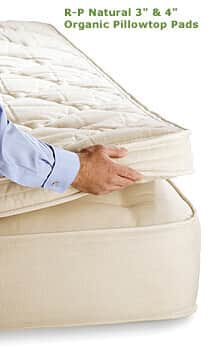
Some sleepers consider a latex topper or pillowtop rather than replacing an entire mattress. This approach can add cushioning over an existing bed, but it will not necessarily correct a mattress that has lost support or developed a permanent sag. The condition of the mattress underneath remains important because the topper follows the surface below it.
One example in this category is the Royal-Pedic Natural Latex Single-Sided 3-inch Pillowtop Pad. Its listed construction includes a layer of natural Dunlop latex encased in long-staple cotton, with untreated French lamb’s wool also described in the product details. At three inches thick, it is presented as an added cushioning layer placed on top of a mattress, rather than as a complete mattress support system.
That distinction is useful when evaluating any topper: ask what it is intended to change and what it cannot change. A layer may modify surface cushioning or pressure feel, but it does not replace the structural core of the bed beneath it. Also check the product’s care instructions, fit, and compatibility with your existing mattress before making a decision.
Durability and care: read the details, not just the headline
Durability depends on the full construction, materials, use, and care. It is not possible to guarantee a mattress lifespan from the words “organic latex” alone. Review the warranty terms and understand what they cover, including requirements for the foundation, visible impressions, and care. A warranty is a set of conditions, not a promise that every comfort change will qualify for replacement.
Ask whether the mattress is designed to be rotated or flipped. Some mattresses have distinct top and bottom layers and are not reversible; others may be designed for two-sided use. The product instructions should settle the question. Using a mattress in a way its construction does not allow can affect comfort and may complicate warranty coverage.
Protective bedding can help keep spills, perspiration, and everyday wear from reaching the mattress. Choose a protector that fits the mattress depth and preserves the surface feel you want. If you are sensitive to heat or want the bed to feel as close as possible to its original surface, consider how the protector’s fabric and waterproof layer may influence breathability and texture.
A calm, useful checklist for comparing latex beds
Instead of being swept up in a single material claim, gather the information that makes one construction comparable with another. A simple checklist can keep the process grounded:
- Layer order: Identify what sits at the surface, beneath it, and at the base.
- Layer thickness: Note how much latex is used and distinguish it from total mattress height.
- Firmness information: Record the maker’s description and any technical measures, while remembering that labels are not universal.
- Latex sourcing: Find out whether the material is natural, blended, or certified organic, and what the certification covers.
- Other components: Check the cover, quilting, coils, wool, cotton, and any other listed materials.
- Fit with your sleep habits: Try your usual positions and note pressure, balance, and ease of movement.
- Base and care requirements: Confirm the recommended foundation, cleaning instructions, and whether rotation or flipping is advised.
- Trial and warranty terms: Read the practical conditions before purchase, including return costs and exclusions.
The bottom line: look at the whole bed
Evaluating organic latex layers is ultimately an exercise in seeing beyond the label. A material’s origin and certification can tell you important things about sourcing, but comfort comes from how the layers work together and how that construction responds to your body. Thickness, firmness, density, cover design, and the support system all contribute to the experience.
Take the time to map the mattress from top to bottom. Ask clear questions when specifications are vague, and treat firmness ratings as a starting point rather than a verdict. Most of all, consider your own sleep position and preferences. The right latex bed is not simply the one with the most impressive material claim; it is the one whose construction, feel, and practical care requirements make sense for everyday use.